CareLoop — From Symptom to Recovery, One Connected Care Loop
Most hospital systems stop at “appointment booked” inside one hospital. CareLoop follows the patient through the whole journey, across many hospitals and pharmacies, on a service-oriented microservice platform.
One Journey, Many Providers
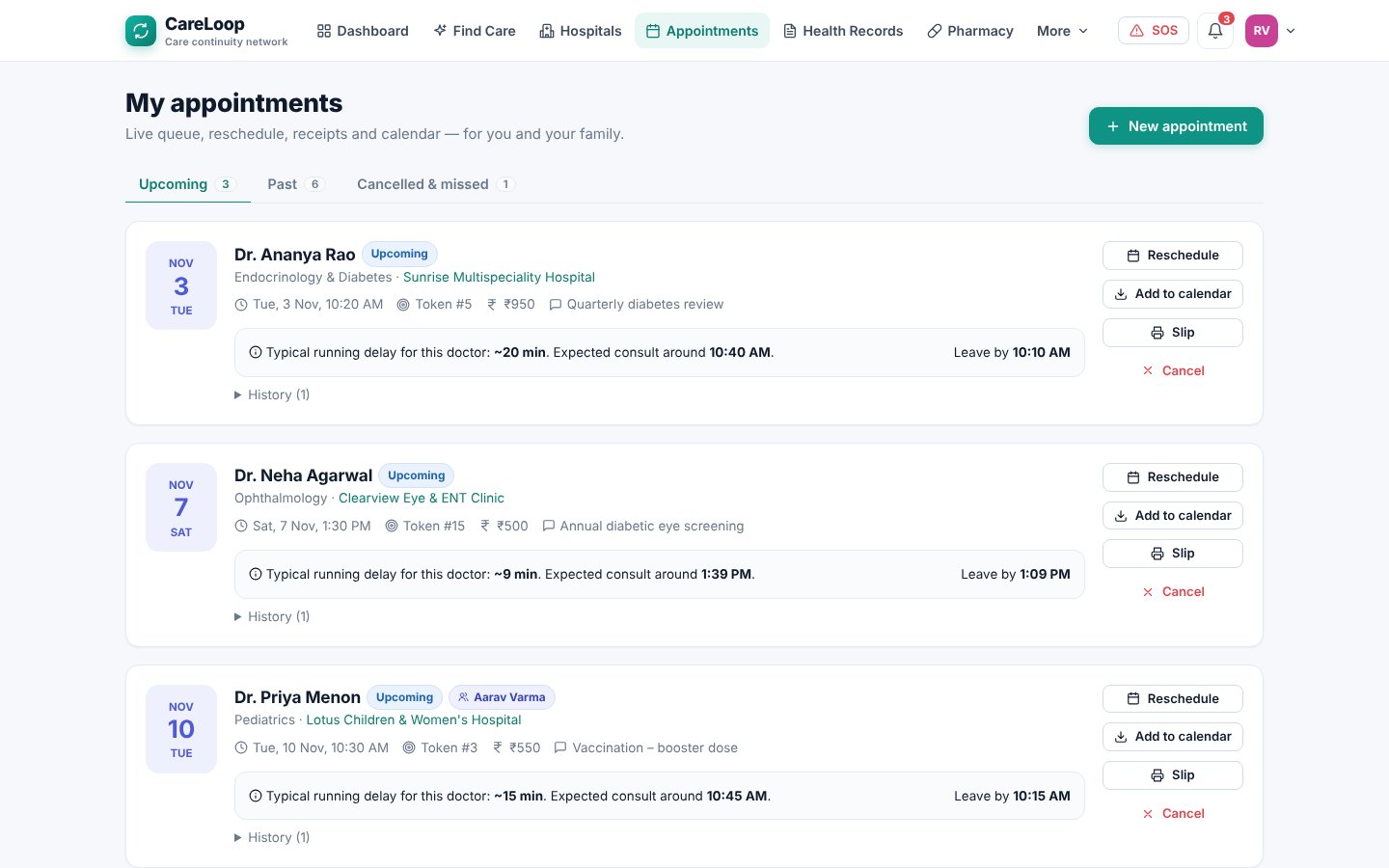
A patient describes symptoms, gets an explainable triage, and CareMatch ranks every hospital in the network by waiting time, cost, trust, distance and experience. Booking shares records with consent, a live token queue shows when to leave, and the e-prescription is priced across partner pharmacies.
Dose reminders track adherence, verified feedback feeds each hospital’s Trust Score, and the full history and reports stay with the patient.
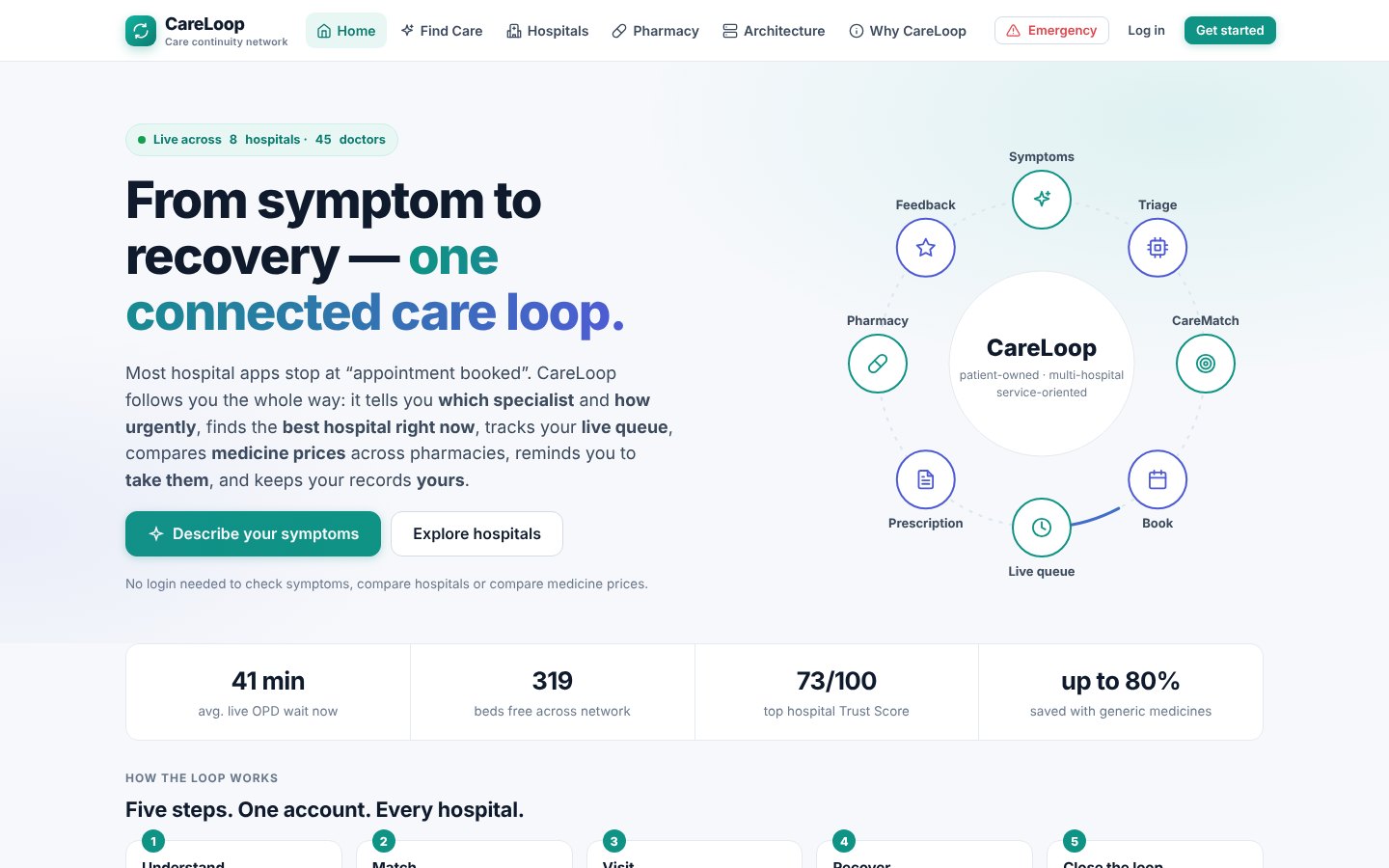
From Symptom to Recovery
Every step is a call to a different microservice, composed by the gateway.
1. Triage
Symptoms in chips or plain text become a specialty, urgency score and red flags.
2. CareMatch
All hospitals ranked: balanced, fastest, cheapest, nearest or best-rated.
3. Book & queue
Conflict-checked booking with consent to share records, then a live token queue.
4. Prescribe & compare
The e-prescription is priced across partner pharmacies, with generic savings.
5. Remind & adhere
Dose reminders and an adherence score keep treatment on track.
6. Feedback
Verified reviews, NLP sentiment and a Bayesian Trust Score close the loop.
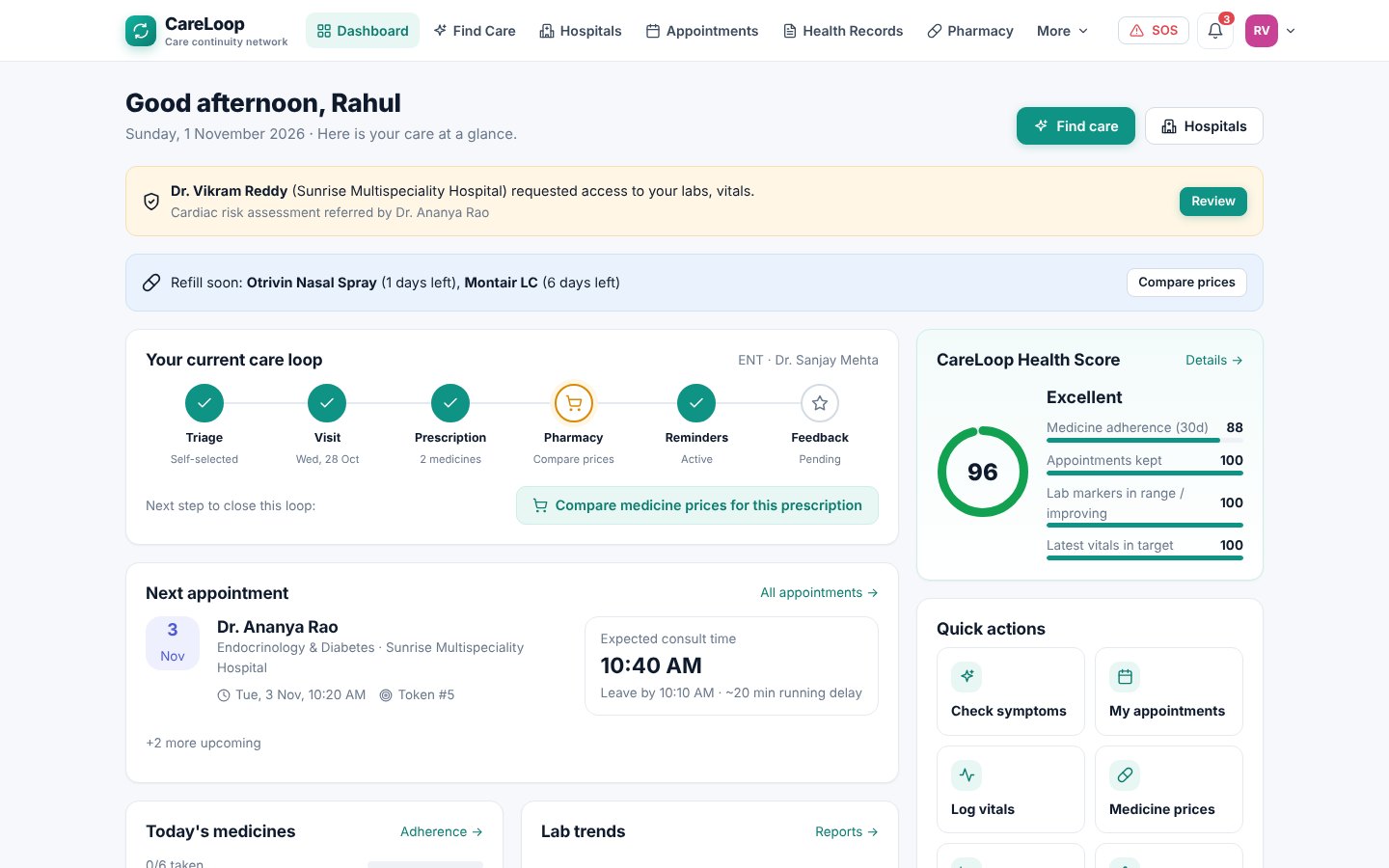
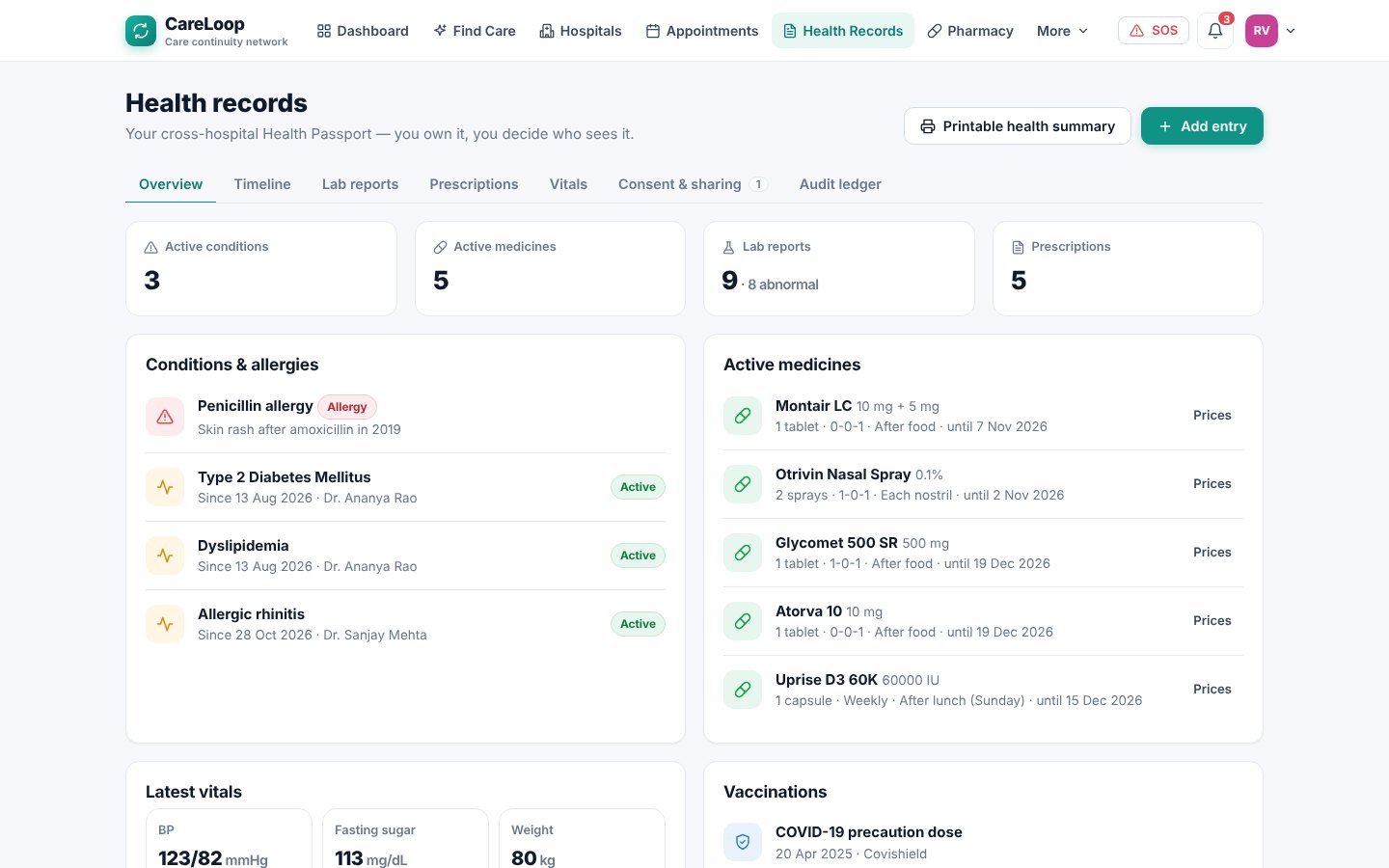
A Dashboard Built Around the Patient
The patient dashboard shows where they are in the care loop, the next appointment with an expected consult time, today’s medicines, lab trends and a Health Score that combines adherence, appointments kept, lab markers and vitals.
- Health records: timeline, prescriptions, labs with normal ranges, vitals and alerts
- Consent manager: scoped, time-bound access for doctors, logged on a SHA-256 hash-chained ledger
- Care circle: book and manage care for family members from one account
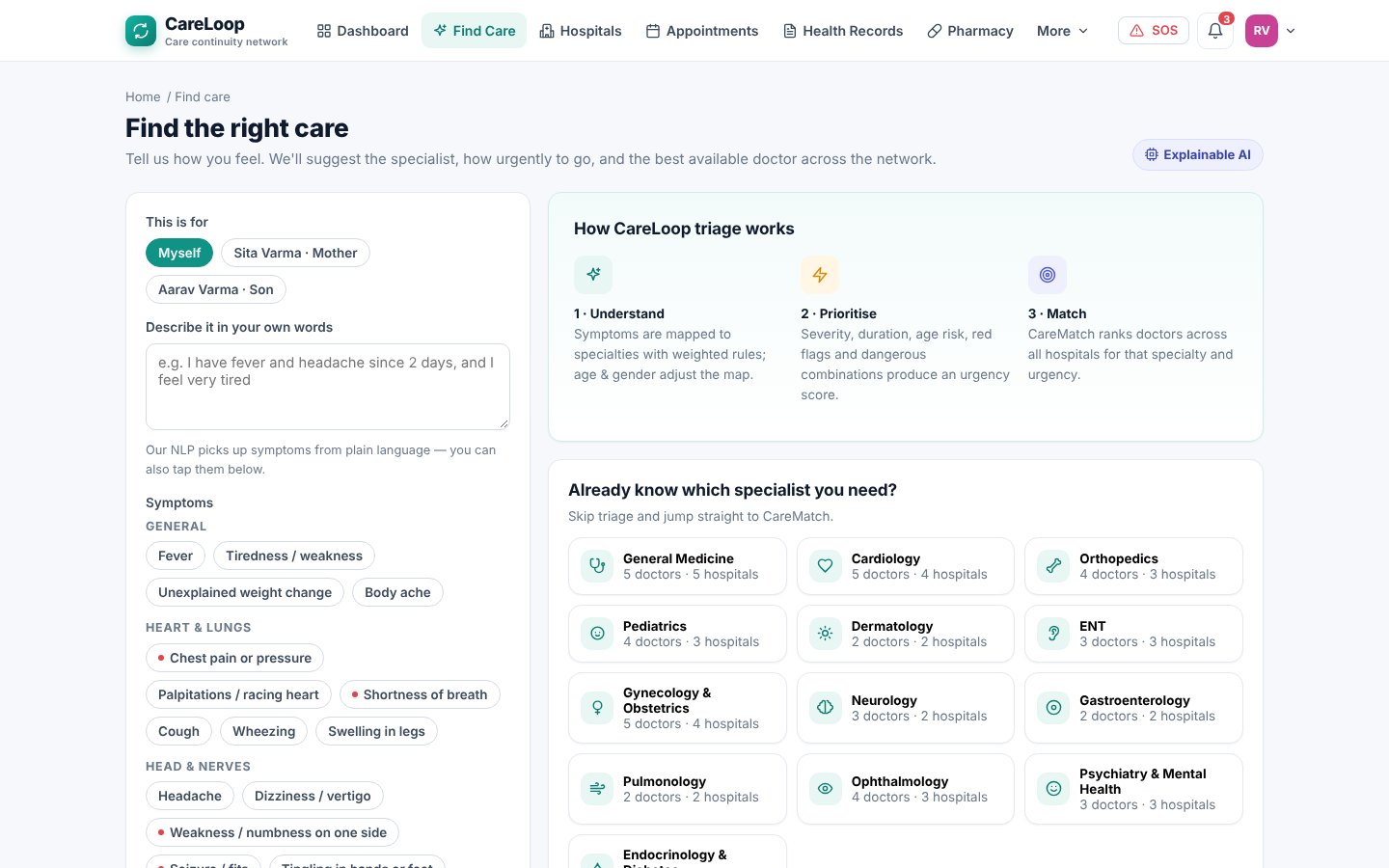
Explainable Triage, Network-Wide Matching
Urgency is computed from severity, duration, age risk, symptom count, red flags and dangerous symptom combinations, and every point is shown to the patient. CareMatch then weighs time, cost, trust, distance and experience, with the weights shifting to match the chosen priority.
Red Flags
Chest pain, breathlessness and other warning signs raise urgency and surface emergency guidance.
Five Priorities
Balanced, fastest, cheapest, nearest or best-rated; in person or teleconsult.
Live Hospital Board
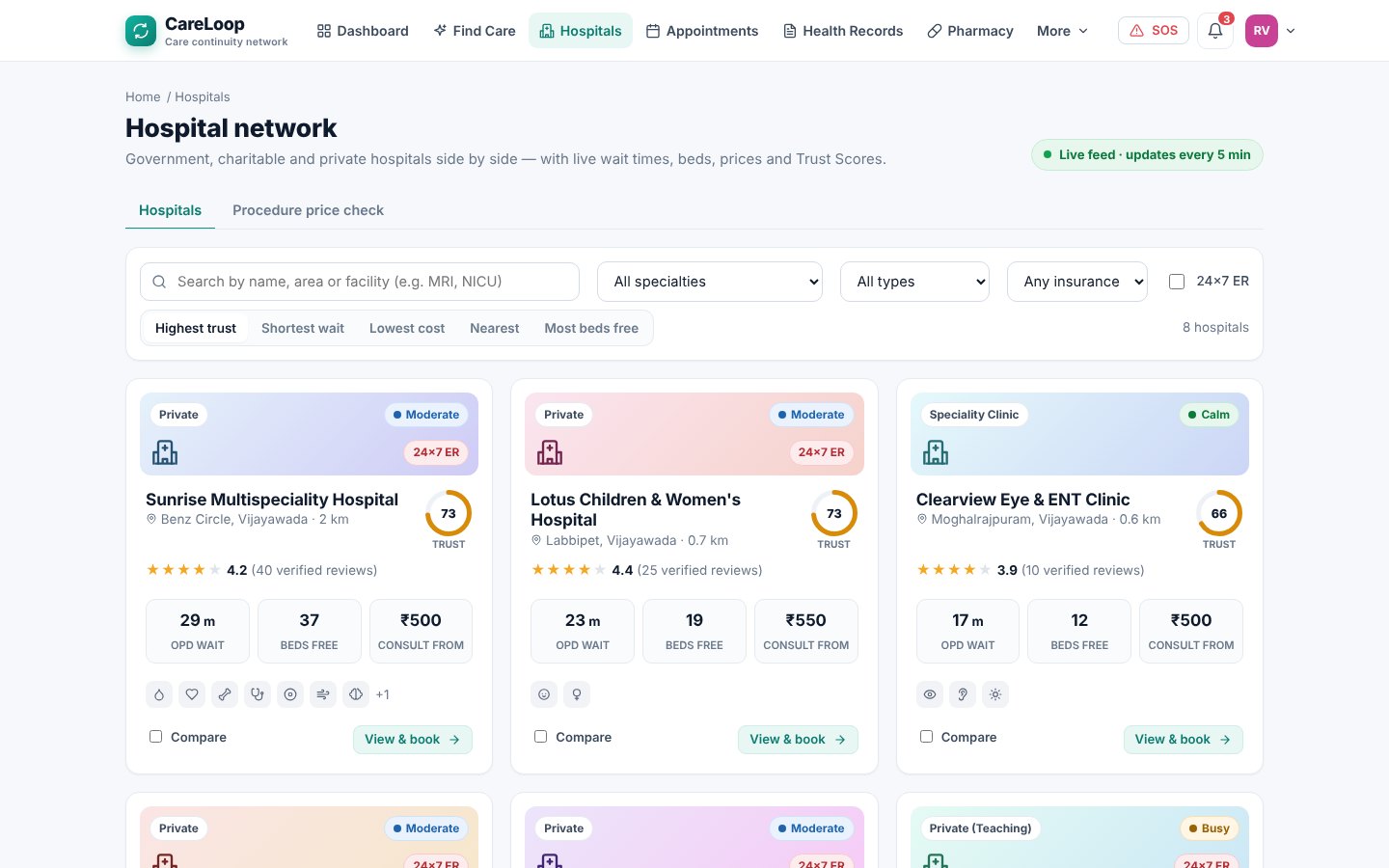
Waiting times, free beds and procedure prices for every hospital.
Side-by-Side
Compare hospitals on wait, cost, trust and reviews before booking.
Prescriptions Priced Across Pharmacies
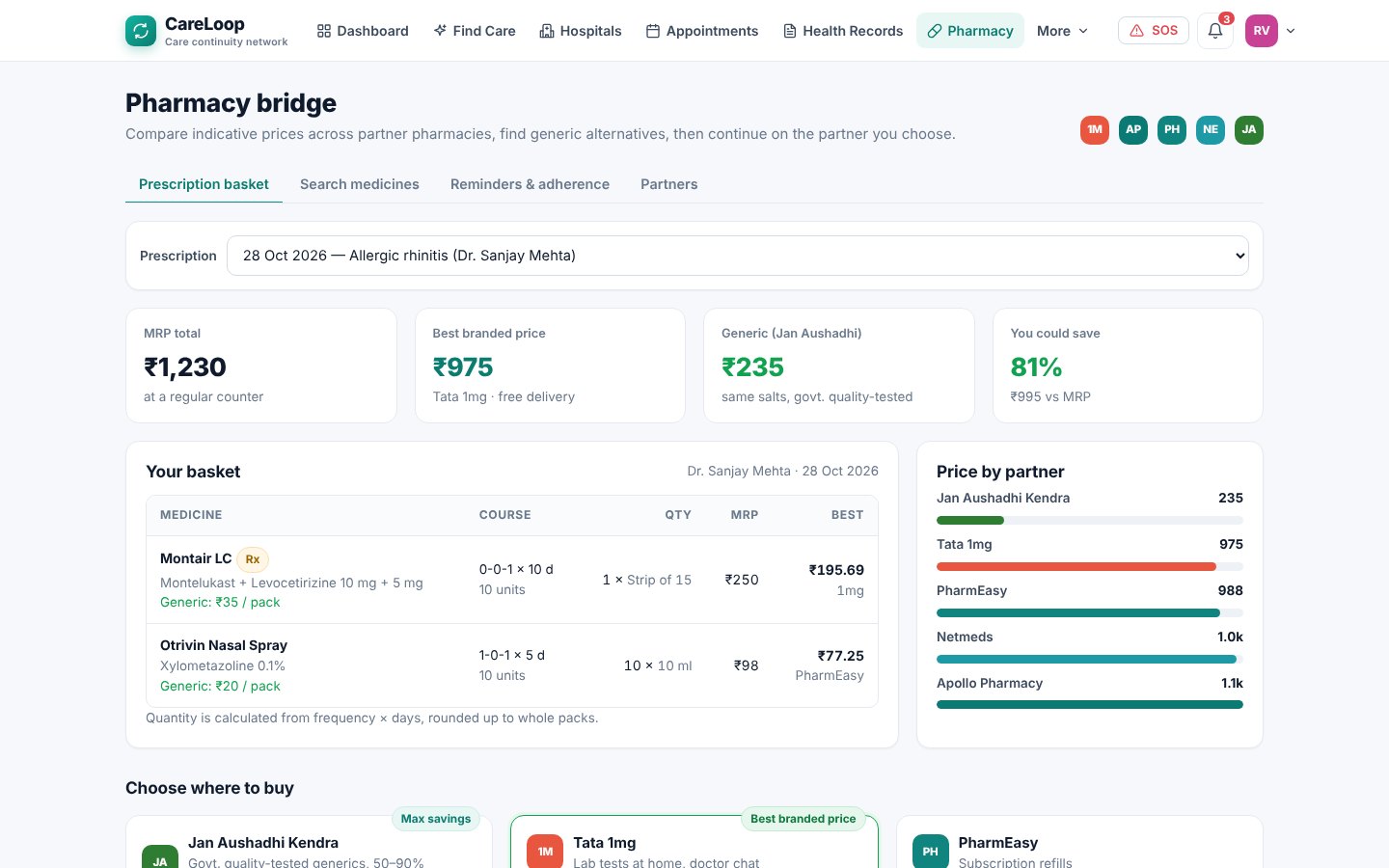
The Pharmacy Bridge turns a prescription into a basket, prices it across partner pharmacies, suggests generic equivalents and shows the saving against MRP. Reminders and refill alerts follow from the same prescription.
- Basket optimiser: the cheapest way to buy the whole prescription
- Generic savings: Jan Aushadhi and other generics alongside branded medicines
- Indicative prices: the demo uses simulated prices; partner buttons open the partners’ public search pages
For Doctors and Administrators
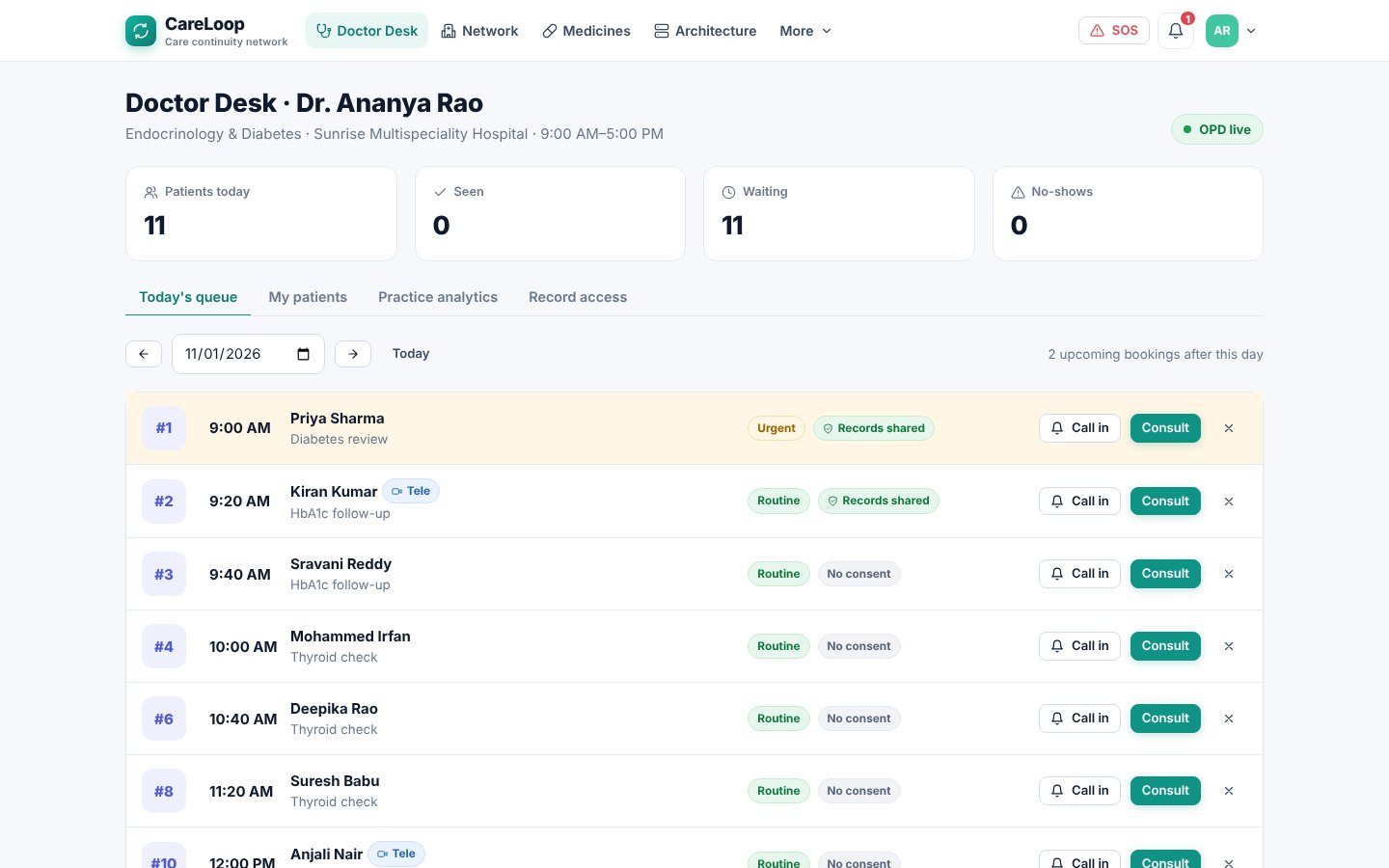
The same platform serves the OPD desk and the network operations team.
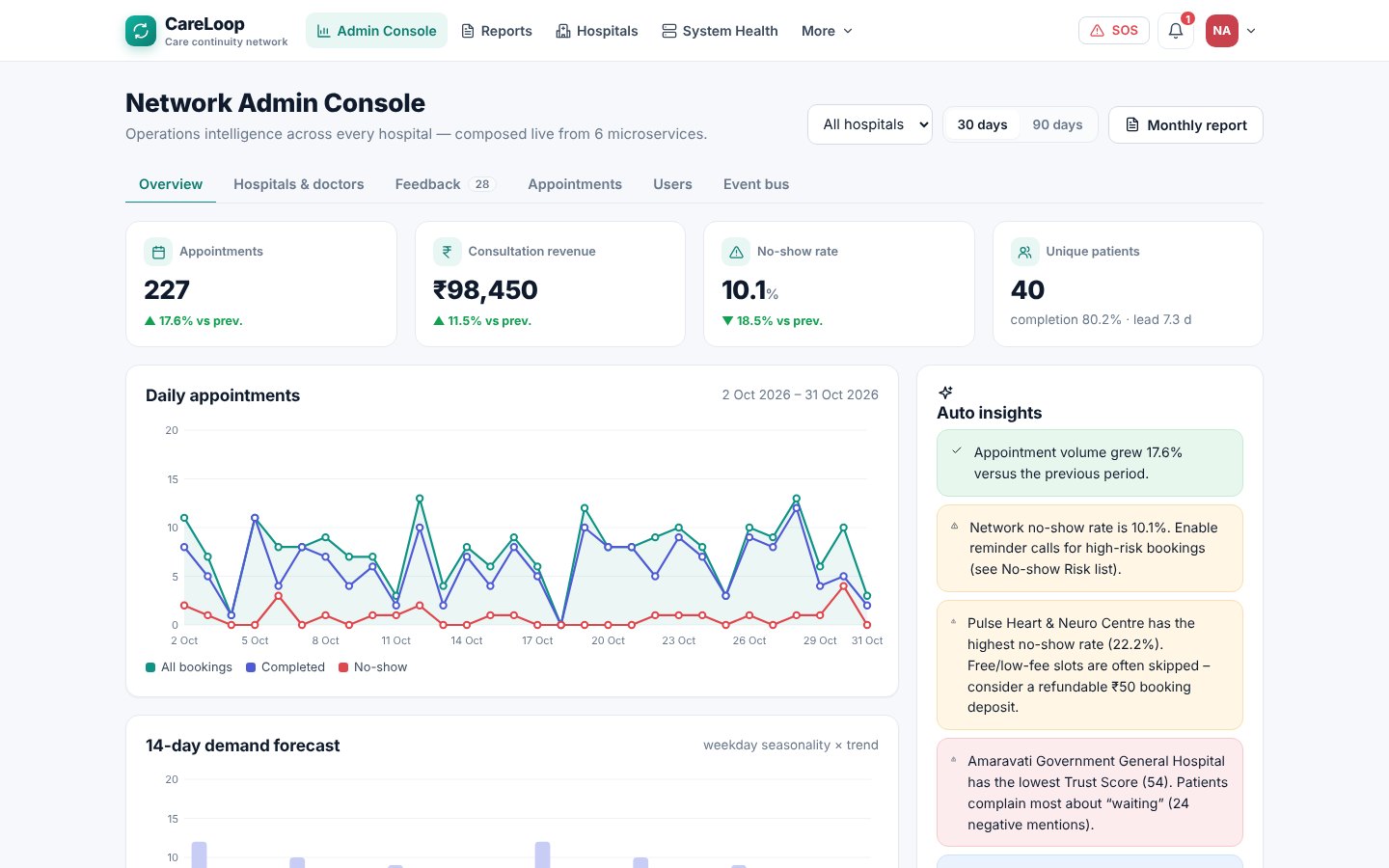
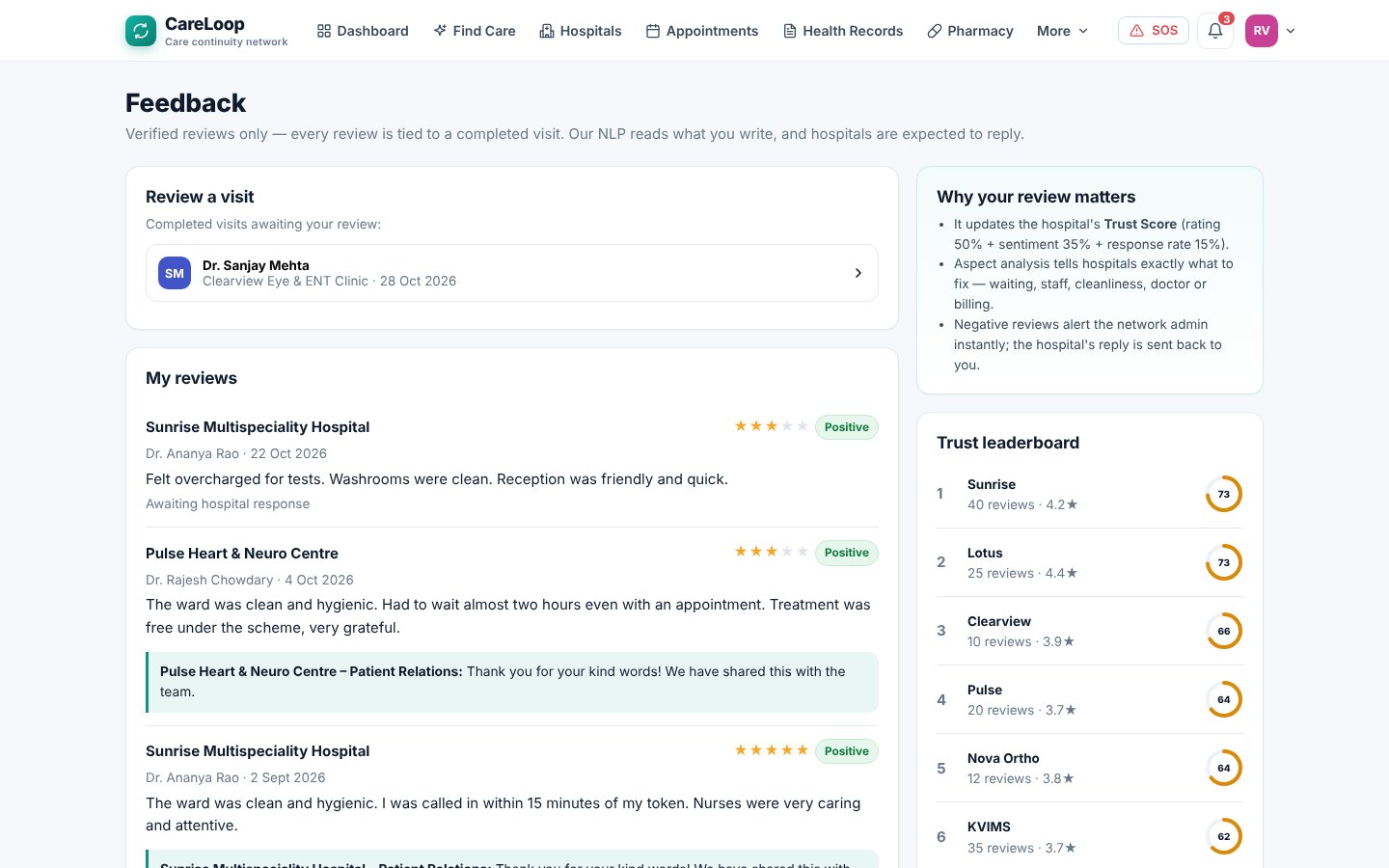
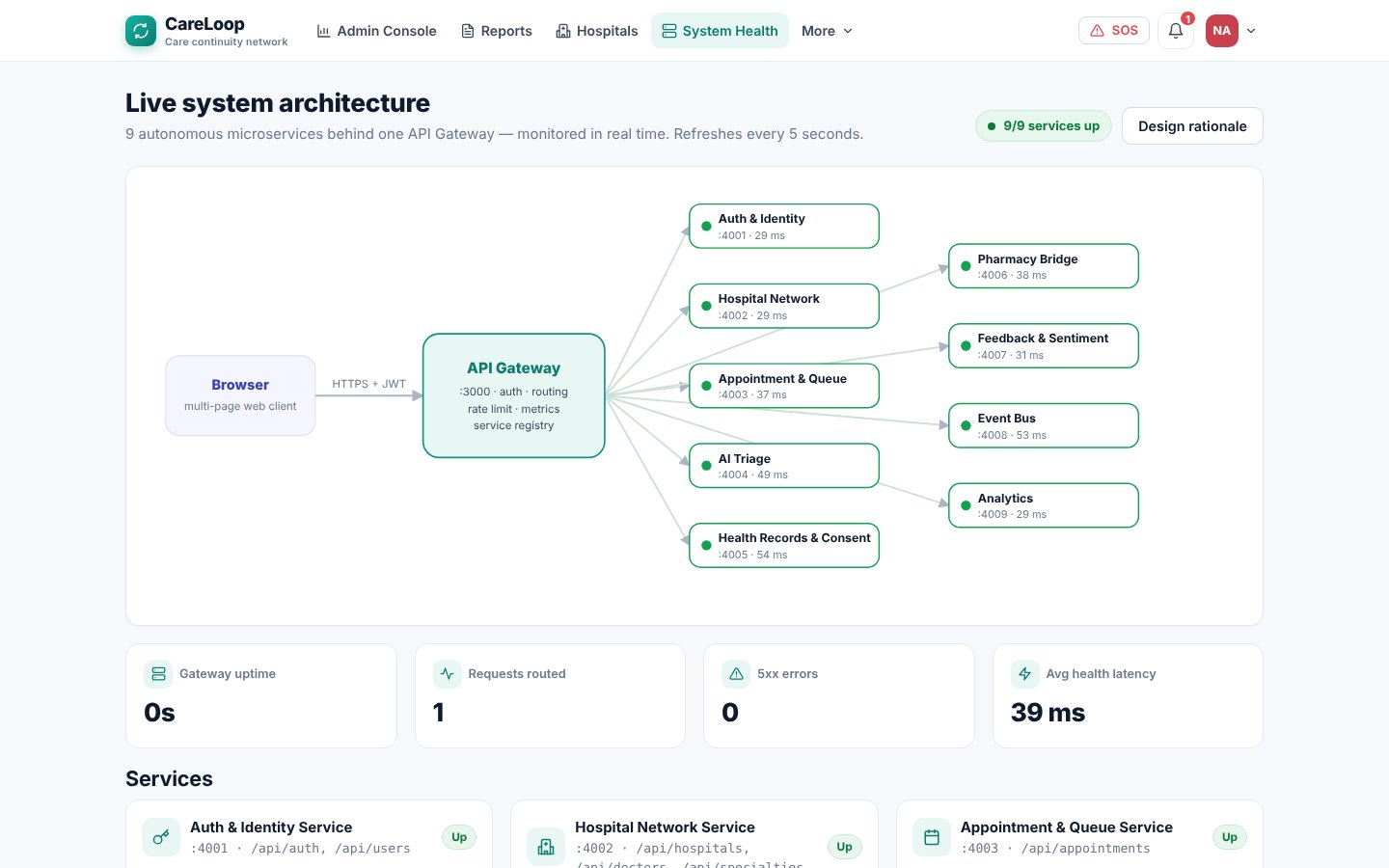
Gateway and Nine Microservices
Each service is its own process with its own data store. The gateway verifies the JWT once, forwards identity, routes by prefix and records metrics; services talk synchronously over REST and asynchronously through the event bus.
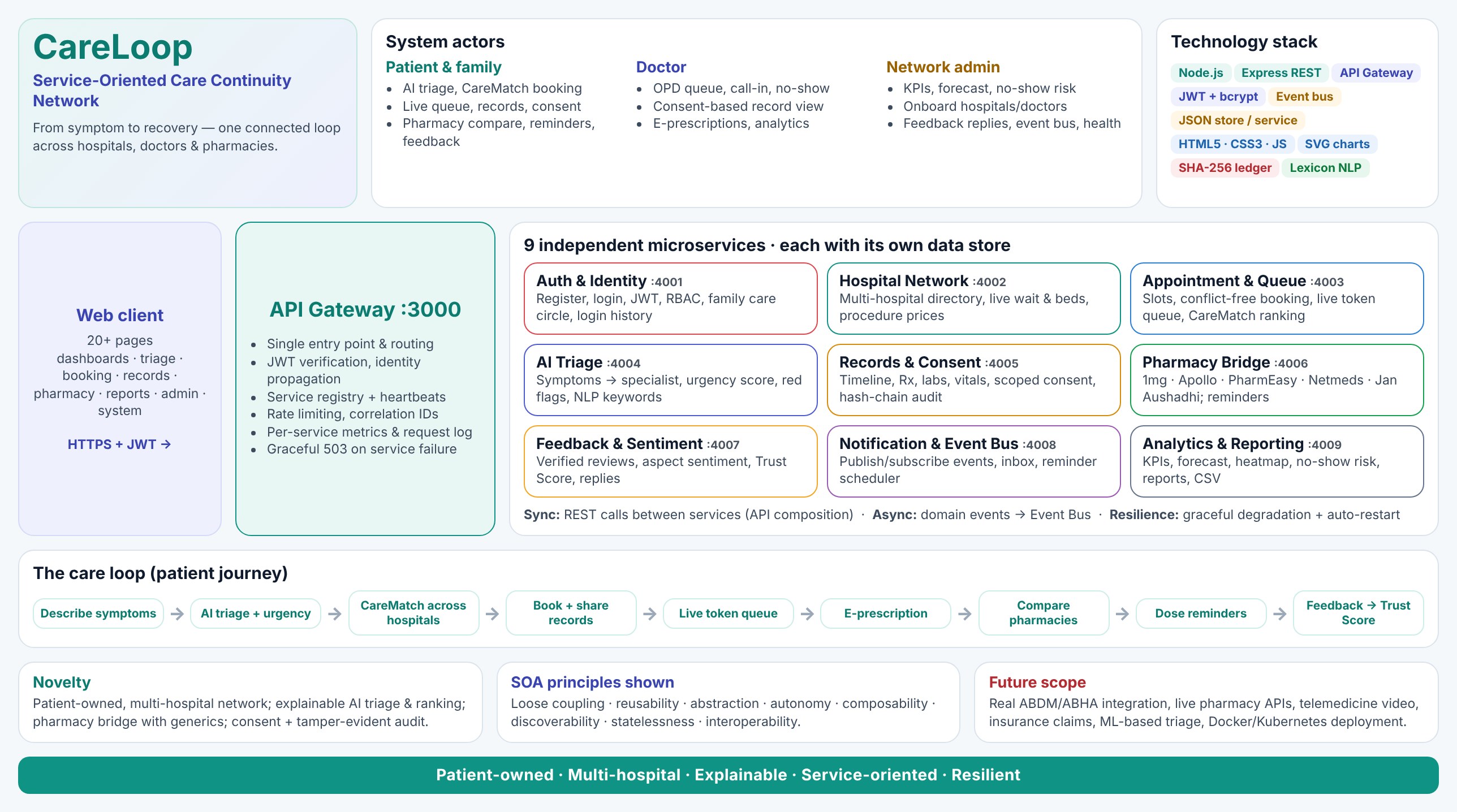
Nine Services, One Gateway
| Service | Port | Responsibility |
|---|---|---|
| Auth & Identity | 4001 | Registration, login (bcrypt), JWT, roles, family care circle, login history |
| Hospital Network | 4002 | Hospitals, departments, doctors, live wait time and beds, procedure prices |
| Appointment & Queue | 4003 | Slots, conflict-checked booking, reschedule and cancel, live token queue, CareMatch |
| AI Triage | 4004 | Symptoms to specialty, urgency score, red flags and dangerous combinations |
| Health Records & Consent | 4005 | Timeline, prescriptions, labs, vitals, consent, hash-chained audit ledger |
| Pharmacy Bridge | 4006 | Catalogue, partner price comparison, generics, basket optimiser, reminders |
| Feedback & Sentiment | 4007 | Verified reviews, sentiment and aspect analysis, Trust Score, hospital replies |
| Notification & Event Bus | 4008 | Publish/subscribe domain events, in-app notifications, reminder scheduler |
| Analytics & Reporting | 4009 | KPIs, trends, heatmap, forecast, no-show risk, monthly reports, CSV |
Built to Degrade Gracefully
| Timeouts and fallbacks | Every inter-service call has a timeout and a fallback: if Feedback is down, hospitals still list and CareMatch still ranks; only Trust Scores disappear. |
|---|---|
| Self-healing launcher | The launcher restarts any crashed service automatically. |
| Fault isolation demo | Admins can switch any service off from the System page and watch the rest keep working. |
| Data note | Hospitals, doctors and patients are fictional demo data; triage is decision support, not a diagnosis. Emergency number in India: 108. |
Try It Yourself
Run the project live in your browser, or install the open-source build on your own machine.
Run it in your browser
The real CareLoop gateway and all nine services run inside this page, with the same seeded network of hospitals and doctors. Sign in with one click as a patient, doctor or admin from the login page; bookings, prescriptions and feedback stay in your browser.
RUN DEMODemo logins: patient@careloop.in / patient123 · doctor@careloop.in / doctor123 · admin@careloop.in / admin123
Install it on your machine
Install Node.js 18+, then two commands start the gateway and nine services on your machine, each with its own data store.
INSTALL THE PROJECT (OPEN SOURCE) Source code on GitHubQuickstart & Local Setup Guide
1. Install & Start
npm install
npm start
# open http://localhost:3000
Requires Node.js 18 or newer. No database to install: each service keeps its own JSON store.
2. Sign In With a Demo Role
- Patient:
patient@careloop.in/patient123 - Doctor:
doctor@careloop.in/doctor123 - Admin:
admin@careloop.in/admin123
3. Test & Reset
npm test        # API smoke test (while npm start runs)
npm run reset   # wipe and re-seed demo data
4. Try Fault Isolation
- Sign in as admin and open System.
- Switch a service off, for example Feedback.
- Browse hospitals: everything still works except Trust Scores.
Explore the Source Code
The gateway, nine microservices, seed data, smoke tests and the multi-page web client.
View Repository on GitHub Run the Live Demo